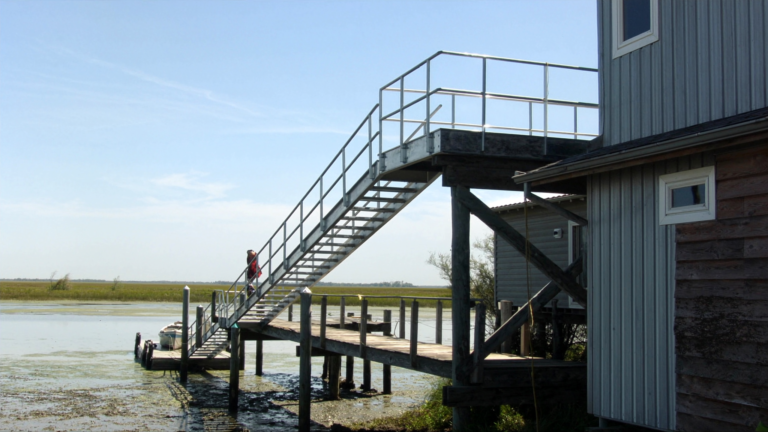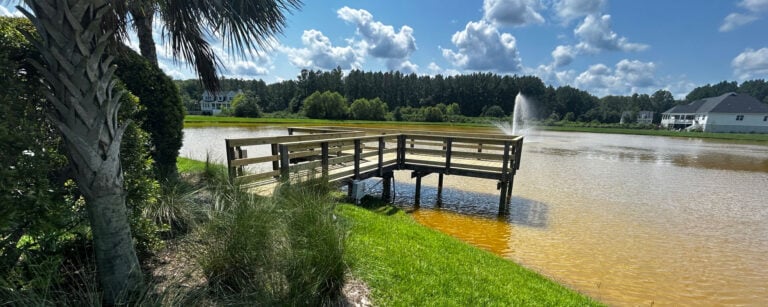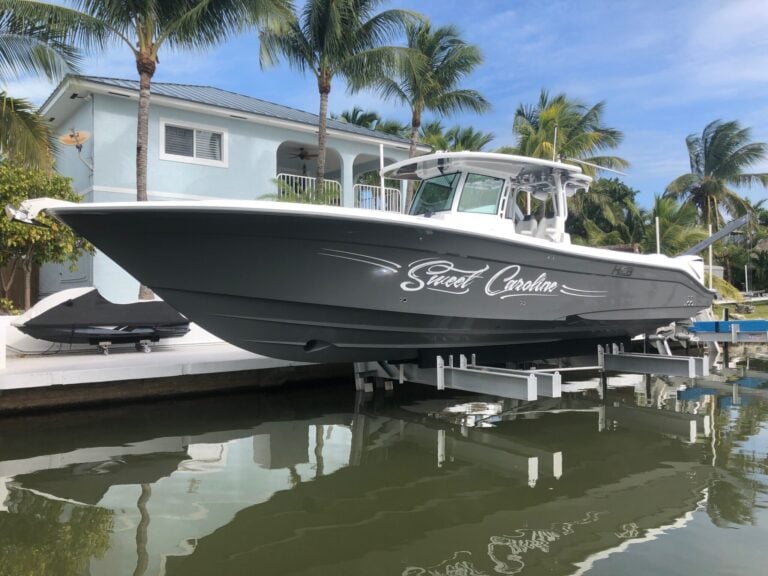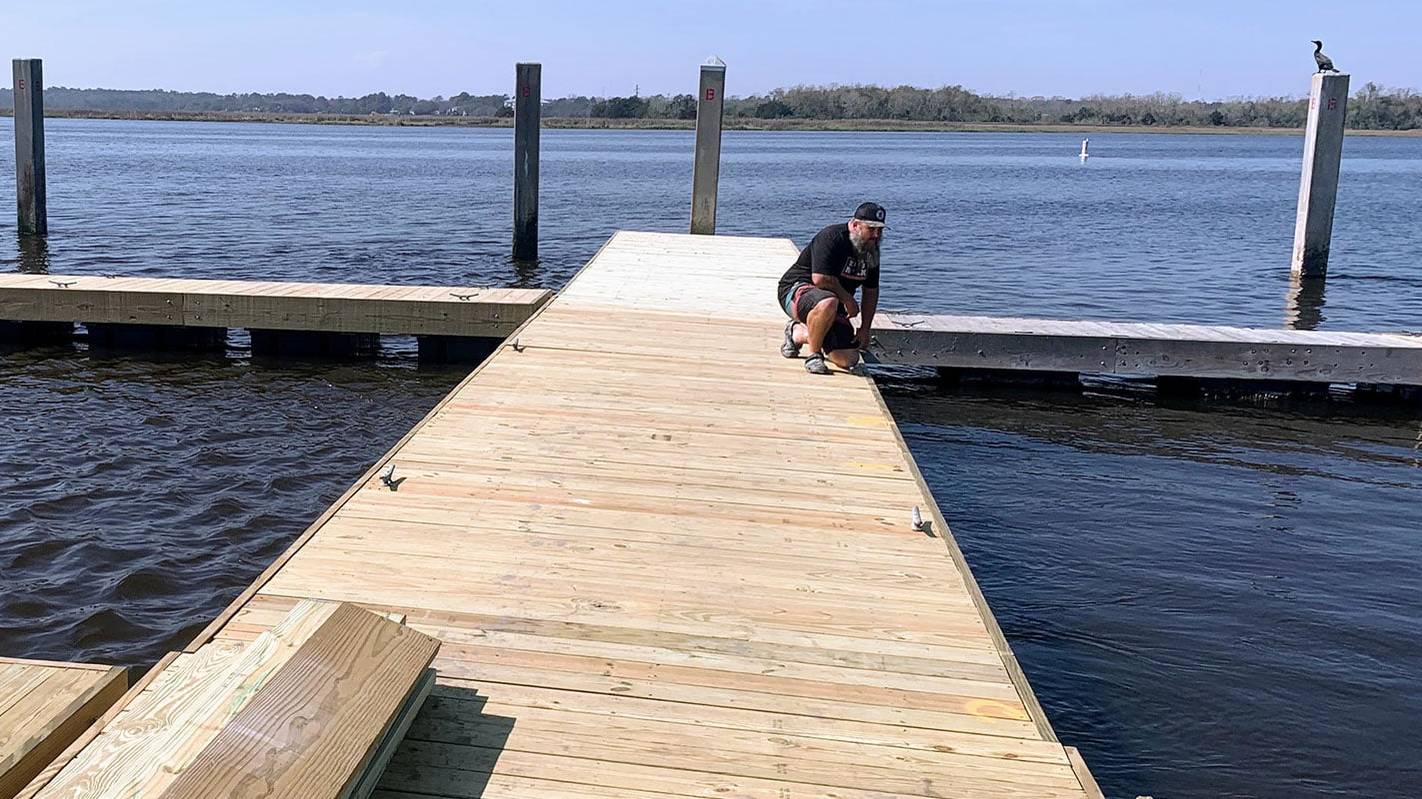
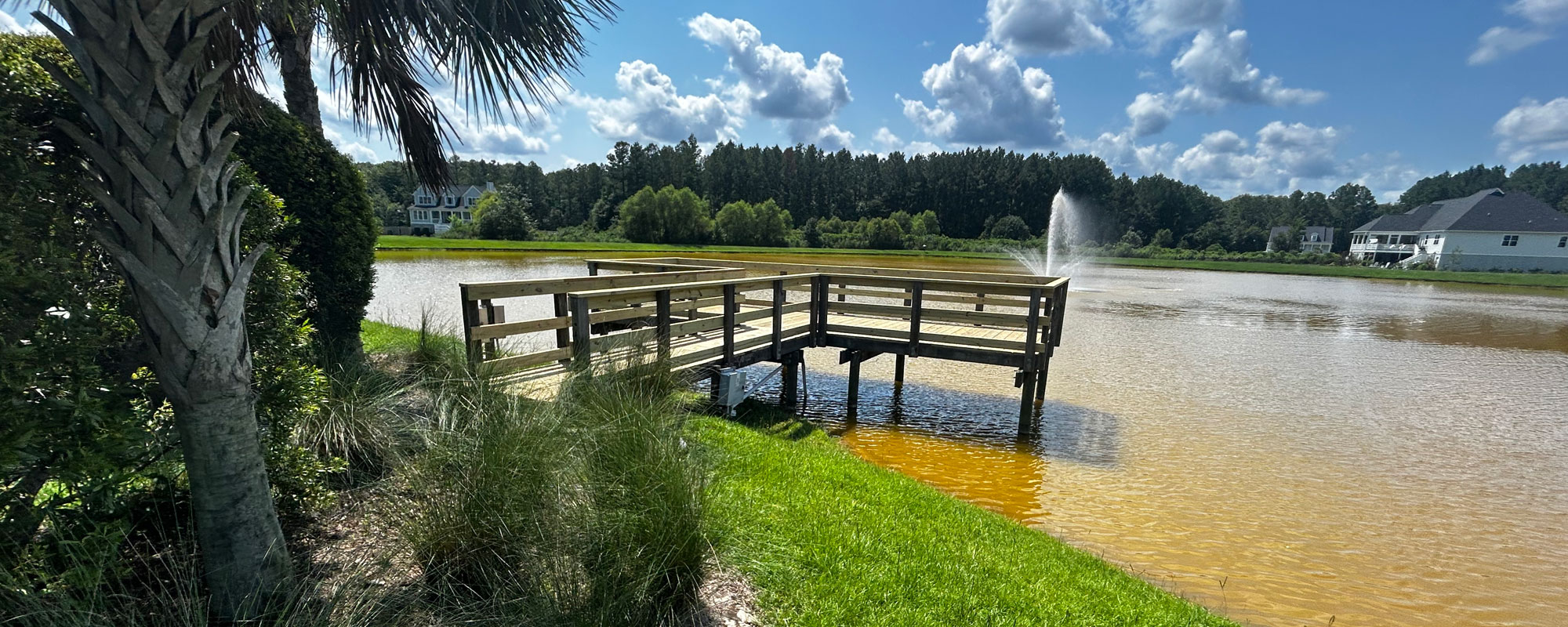
Buying or selling a waterfront property in Charleston, SC comes with more than the home itself. Many properties also include docks, seawalls, bulkheads, elevated piers, pierheads, gangways, and floating docks.
These structures add major value, but they can also carry repair costs that a standard home inspection may not fully cover. Home inspections are important. Marine structures are simply a separate specialty.
At Charleston Dock Doctors LLC, we often see dock and shoreline concerns come up late in the real estate process, after pricing, expectations, and negotiations are already moving. A waterfront structure review helps bring those items into the conversation earlier so buyers, sellers, agents, inspectors, and homeowners can make clearer decisions.
Here are the main areas worth reviewing.
1. Dock Decking and Walking Surfaces
Dock boards can look serviceable from a distance but still have soft spots, cracked boards, loose fasteners, rot, or worn sections. A few damaged boards may be a simple repair. Widespread wear may point to a larger re-decking project.
2. Framing, Headers, Bracing, and Piles
The structure under the decking is often where bigger repair questions begin. Headers, stringers, cross bracing, bolts, and piles all help support the dock or pier system. Common concerns include split headers, sagging framing, loose bracing, corroded hardware, weak piles, and framing that no longer carries the structure properly. These items can turn a small surface repair into a more involved project.
3. Floating Dock Hardware and Flotation
Floating docks move with tide, wake, wind, and daily use. That movement makes the hardware, pile guides, hinges, floats, and gangway connection points especially important. Detached floats, punctured flotation, loose hardware, unstable transitions, and worn connectors can affect how the dock performs and how safe it feels to use.
4. Bulkheads, Seawalls, and Retaining Walls
A seawall or bulkhead helps hold back soil, manage erosion, and protect usable yard space. Warning signs can include leaning, bulging, settlement, joint separation, washout, drainage issues, soil loss, or undermining near the base.
For sellers, early awareness can help with pricing and disclosure conversations. For buyers, it helps clarify visible repair exposure before closing.
5. Repair Path and Permitting Questions
Waterfront repairs are not always as simple as replacing old material with new material. Existing dimensions, access, repair limits, and permitting questions can all affect the next step.
A waterfront structure review does not replace agency guidance, engineering, or permit approval. It does help identify visible conditions and practical repair questions before assumptions are made.
When a Review Makes Sense
A specialist review is worth considering when a property includes a dock, seawall, bulkhead, elevated pier, pierhead, gangway, or floating dock, especially if there is visible wear, movement, cracking, corrosion, washout, settlement, or uncertainty about repair scope.
Charleston Dock Doctors LLC offers Waterfront Structure Reviews with photo documentation and a practical condition summary.
The goal is simple: document what is visible, explain the main concerns in plain English, and help everyone understand the next best step before the structure becomes a contract surprise.
Contact Charleston Dock Doctors to schedule a Waterfront Structure Review.