Hurricane season has a way of reminding Charleston waterfront owners what matters.
Not the pretty view. Not the perfect sunset. The structure underneath it all.
Your dock, pier, floating dock, boat lift, seawall, bulkhead, rip rap, and shoreline take on a lot when storms push water higher than usual. Wind, waves, surge, heavy rain, loose boats, and floating debris can all find the weak spots fast.
Here’s the thing: the water always tells on bad work.
That’s why storm preparation is less about panic and more about paying attention early.
Start with the obvious weak points
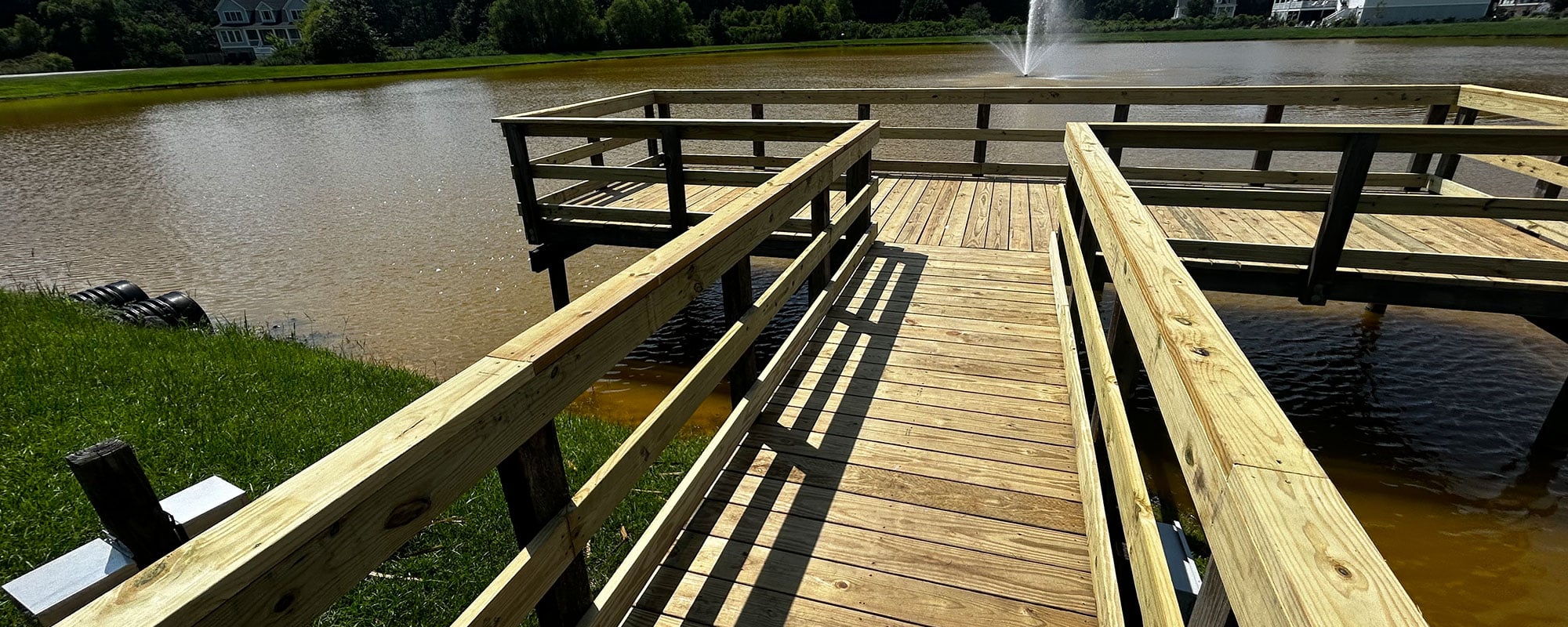
Walk your dock or pier and look for loose deck boards, raised screws, soft spots, cracked decking, wobbly handrails, leaning piles, loose cleats, or sections that feel like they move more than they should.
Small detail. Big difference.
On a floating dock, check the gangway, hinges, pile glides, float condition, rub rail, fenders, corners, cleats, and connection points. Floating docks are designed to move with the water, but damaged hardware or worn contact points can create problems during rough conditions.
If you have a boat lift or PWC lift, make sure it’s reviewed before heavy weather arrives. Storm prep is not the time for guesswork around cables, bunks, cradles, motors, or lift structure.
Don’t ignore the wall behind the wall
For seawalls and bulkheads, storm preparation starts with drainage. Heavy rain and rising water can put pressure behind the wall, especially if the backfill is already soft, sunken, or holding water.
Look for sinkholes, wet spots, soil pulling away from the wall, leaning caps, gaps behind the top cap, or areas where the yard seems to be dropping. Weep holes, filter fabric, #57 gravel, French drains, proper discharge paths, and backfill grading can all affect how a wall handles water.
Not glamorous, but important.
Rip rap areas should also be checked for shifted stone, exposed soil, or washed-out spots where water may cut behind the shoreline protection.
Plan before the forecast gets loud
By the time a named storm is on the radar, schedules tighten. Supplies get harder to coordinate. Everyone starts calling at once.
Seasonal dock repair, pier repair, seawall repair, bulkhead work, rub rail/fendering, handrail installation, floating dock repairs, and shoreline improvements are easier to evaluate before the rush.
Charleston Dock Doctors LLC helps waterfront property owners across Charleston, James Island, John’s Island, Mount Pleasant, Folly Beach, Isle of Palms, Wadmalaw, and nearby tidal creeks prepare their marine structures with practical, site-specific guidance.
Charleston Dock Doctors LLC builds and repairs docks, piers, pierheads, seawalls, bulkheads, floating docks, gangways, boat lifts, rip rap, and shoreline structures with clear communication and a focus on sound work. Charleston Dock Doctors LLC is here to help you protect your waterfront before storm season puts it to the test. Service details align with the uploaded company website content.
Visit CharlestonDockDoctors.com to request a quick estimate.


