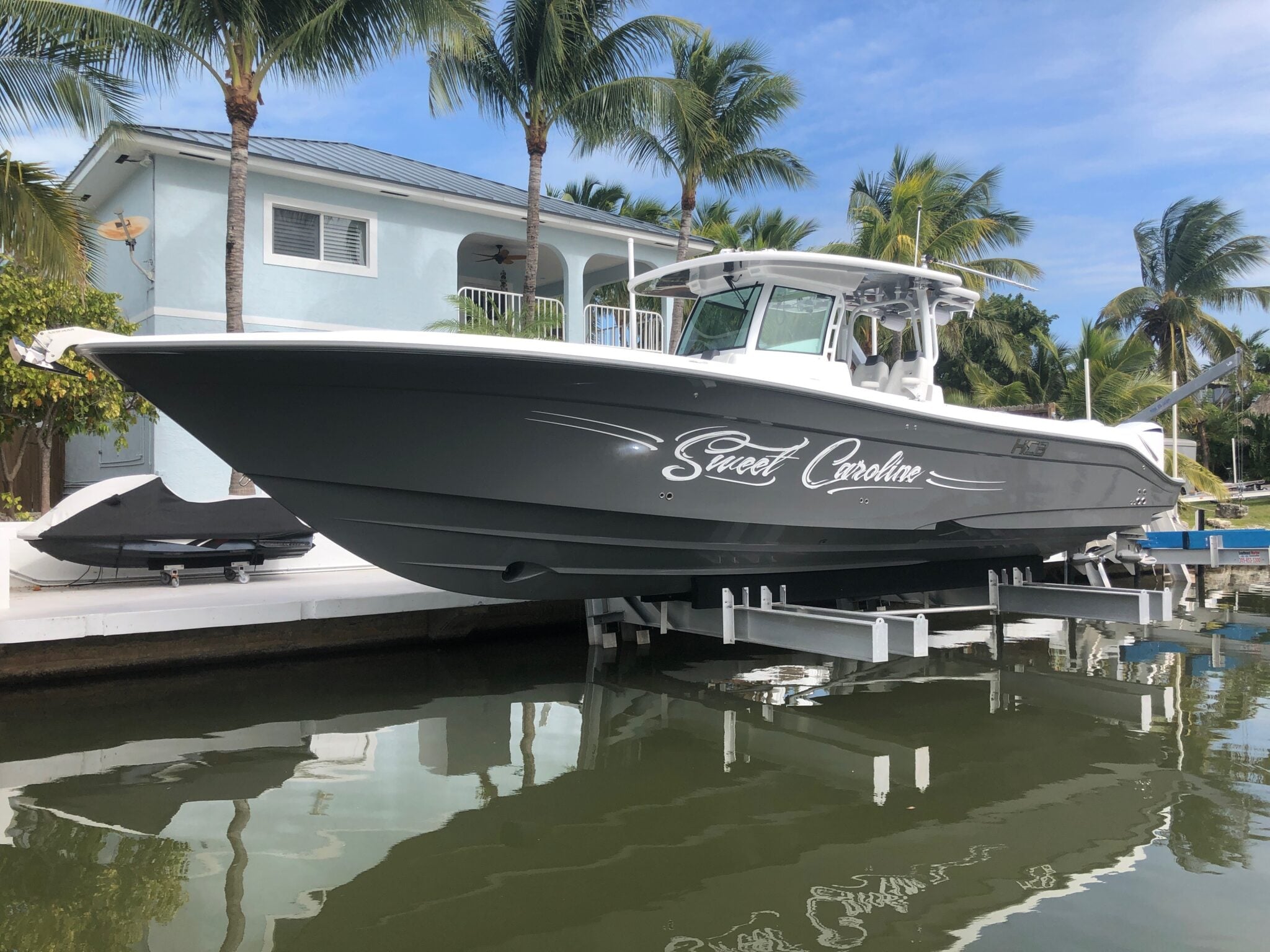
A boat lift in Charleston salt water lives a hard life. It is wet every day, it carries a moving load twice a tide, and the air around it is full of salt. Most lift failures we see did not happen all at once. A cable frayed for months, a pulley stopped turning, a piling started to lean. A simple routine catches those problems while they are still small.
This is the checklist we recommend. Always follow your lift manufacturer’s manual where it is more specific.
Every time you use it
- Listen. Grinding, clicking or a motor that labors are early warnings.
- Watch the boat come up. It should rise level. If one end lags, stop and find out why.
- Rinse the motor cover, switch box and any exposed hardware with fresh water when you can.
Every month or two
- Cables. Look along their full length for broken strands, kinks, flattening and rust bleeding from inside. Check where they wrap on the drum and where they pass over pulleys, since that is where wear concentrates.
- Pulleys and sheaves. They should turn freely. A seized pulley chews through a cable fast.
- Cable clamps and fittings. Make sure they are tight and not corroded.
- Bunks and cradle. Check bunk boards, carpet and bolts. Worn bunk carpet can scuff the hull; a loose bunk can let the boat shift.
- Fasteners. Look for corrosion on bolts and brackets, especially where stainless meets aluminum.
Once a year
- Motor and gearbox. Check gearbox oil or lubrication per the manufacturer, and look for water intrusion under the motor cover.
- Electrical. Have the switch, wiring and any GFCI protection checked. Salt air is hard on connections. See dock power, water and lighting.
- Pilings and beams. The lift is only as good as what holds it. Look for leaning or soft pilings and for beams that have shifted. Read dock piling repair.
- A professional service. In salt water, a yearly service by someone who works on lifts every day pays for itself.
When to replace cables
There is no single number. Use, exposure and the cable material all matter, and many salt-water owners end up replacing cables every few years. The rule is simple: if you see broken strands, kinks or heavy corrosion, replace them. Do not wait for one to part with the boat in the air.
Before a storm
Plan ahead. Decide whether the boat comes out of the water entirely, follow your lift manufacturer’s storm guidance, and check pile height and condition before the season. Our hurricane prep guide covers pile extensions and tie-offs.
Signs it is time to call
- The lift won’t raise, lowers on its own, or runs slowly.
- The boat rises unevenly.
- Cables are frayed or pulleys are seized.
- The motor hums but doesn’t turn, or trips the breaker.
- A piling or beam under the lift has moved.
Charleston Dock Doctors is an approved, authorized Hurricane boat lift dealer. We handle boat lift repair and service and new boat lift installation across the Charleston area, along with the pilings that carry them. Request service or call 843-224-2653.