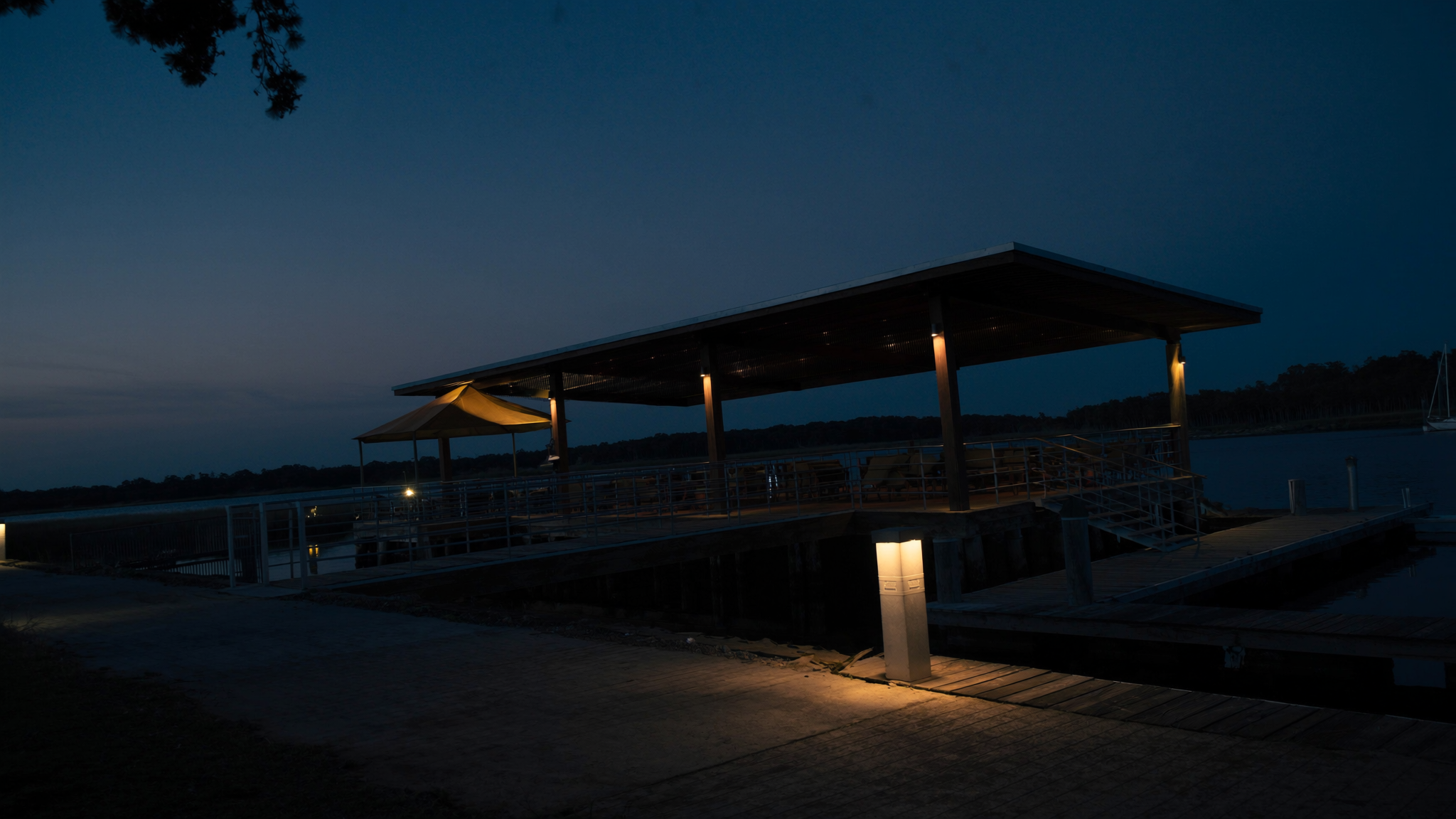
A dock with power and water on it is a different dock. You can rinse the boat, run a lift, work after dark, plug in a cooler, clean fish where the mess belongs.
It is also the part of a dock where shortcuts cause the most trouble, and where the trouble is least visible until it matters. Salt air is relentless on anything electrical, and a dock is the worst possible environment for a lazy installation.
Electrical: this is not a DIY item
We will say this plainly. Running power out over water is licensed electrical work, it is governed by specific requirements for marine installations, and it should be done by a qualified electrician. This article is here to help you understand what you are looking at and ask better questions, not to help you wire it yourself.
The reason is straightforward. Faults on a dock circuit do not just trip a breaker in an inconvenient way. Electricity and water around swimmers is a serious hazard, and it is why marine electrical requirements exist and why they are stricter than what governs your garage.
What a proper dock circuit looks like
You do not need to know how to install it, but you should recognise it when you see it.
- A dedicated circuit from the house, not an extension of an existing one and definitely not a run of extension cord.
- Ground fault protection appropriate to the installation, with a clearly identified means of disconnecting power to the dock from shore.
- Conduit rated for the environment, properly supported along the walkway rather than zip-tied to a joist.
- Weatherproof enclosures and in-use covers on every receptacle. The covers that seal while something is plugged in, not the flip-up kind.
- Corrosion-resistant hardware throughout. Standard steel boxes and screws will not survive here.
If your existing dock has an outlet in a plastic box with a cord run to it, get an electrician to look at it. That is a common find and not a good one.
Test your protection, on a schedule
Ground fault protection is a device, and devices fail. It has a test button for a reason.
Press it monthly. If it does not trip, or does not reset, stop using the circuit and get it looked at. This takes ten seconds and it is the highest-value maintenance task on your entire dock.
Water lines
Simpler than electrical, and still worth doing properly.
Run the line supported along the framing rather than hanging in loops. Use a backflow preventer at the house end. Fit a shutoff at the shore end so you can isolate the whole run, and put a hose bib at the pierhead where you actually need it.
Our winters are mild but not immune. A hard freeze will find any line you cannot drain. Give yourself the ability to shut off and blow out the run, and use it on the handful of nights each year that call for it.
Lighting: less is genuinely more
The instinct is to light the dock like a parking lot. Resist it, for three reasons.
It ruins night vision. Bright overhead light on a dock makes the water beyond it completely black. If you are coming in by boat, glare from a neighbour’s floodlight is genuinely dangerous.
It annoys everyone. Sound and light both carry across water further than people expect. Your floodlight is in somebody’s bedroom.
It is worse for wildlife. Bright, upward-spilling light over marsh has real ecological consequences, and in parts of the coast there are rules about it.
What works better: low-level fixtures mounted in the handrail or under the cap rail, aimed down at the deck. Warmer color temperatures rather than cold blue-white. Enough light to see the walking surface and the edges, and no more. Marine-grade fixtures with proper gaskets and stainless or bronze hardware.
Solar path lights are tempting and mostly disappointing here. Salt gets into them, the batteries do not last, and the output fades to nothing after a couple of seasons.
Plan it before you build, not after
This is the practical point of the whole article. Retrofitting utilities onto a finished dock costs meaningfully more than building them in, and the result is always tidier when the conduit route was planned alongside the framing.
Even if you are not installing power now, run the conduit while the dock is being built. Empty conduit is cheap. Chasing a route through a completed structure five years later is not.
Same goes if you might ever want a boat lift. A lift needs power, and knowing that during design saves you a second job later. Worth reading what a boat lift actually costs before you finalise a dock layout.
Storm season
When weather is coming, kill power to the dock at the shore disconnect. Unplug and bring in anything portable. Cover receptacles. Surge and salt spray together do far more damage to energised circuits than to dead ones.
After the storm, do not simply switch it back on. Look at the conduit, the enclosures and the fixtures first, and if anything went underwater that was not meant to, have it inspected. The rest of the pre-storm routine is in our hurricane preparation guide.
Building or upgrading?
We build the structure and coordinate with licensed electricians for the power side, so the conduit route, the mounting and the fixture locations are designed in rather than added on.
If you have an older dock with questionable wiring, say so when we come out. It is one of the more common things we find and one of the more important things to put right.
See our new builds and installation work, or get in touch.