Once the wind drops and the water goes back down, the next job is a dock storm damage inspection. Charleston docks take their punishment in a predictable order: floating sections and gangways first, then piles, then the ground behind the seawall. You can make the first pass yourself with a phone, a tide chart, and an hour at dead low. What you are looking for is anything that moved, anything carrying load it was never built to carry, and anything no longer fastened to what it was bolted to.
Start with what is safe to stand on
Do not walk a dock you have not looked at from shore. Stand at the landward end and sight down the length of it. A walkway that dips, leans, or has fallen out of line with its piles is telling you the frame moved. Sprung or missing deck boards mean fasteners pulled, and the boards beside them are probably loose too.
Three things end the inspection where you stand: a power pedestal or dock light that is submerged or damaged, a structure that has separated from the shore, and any section resting on the mud instead of hanging on its piles. Kill the breaker at the house before you go near anything electrical, and keep people and pets off until the structure has been looked at properly.
What a dock storm damage inspection in Charleston actually covers
Work three zones in order: above the waterline, at the waterline, and behind the shoreline. Most owners stop at the first one, because it is the only part visible from the deck. The tidal zone, meaning the band that is underwater at high tide and dry at low, is where marine structures actually fail, and in the Lowcountry you get a clear look at it twice a day for about an hour each time.
So plan the walk around the tide, not the daylight. Bring a flashlight for under the pierhead and the float, and write down what you see as you go.
Piles carry the whole structure
Piles get looked at first, because everything else hangs on them. A pile pushed out of plumb, split at the cap, or lifted in its hole is a structural problem, not a cosmetic one. Check the collar where each pile meets the framing: rust streaks, elongated bolt holes, and a gap that opens and closes when you shift your weight all mean the connection worked loose in the surge.
At low tide, look for scour, which is sand and pluff mud washed out from around the base of a pile, leaving it standing in a pocket. Less ground gripping a pile means more movement in the next blow. Soft wood at the waterline, or a pile you can rock by hand, needs a closer look, and dock piling repair in Charleston runs from sistering one pile to driving a new one.
Seawalls and bulkheads fail on the land side
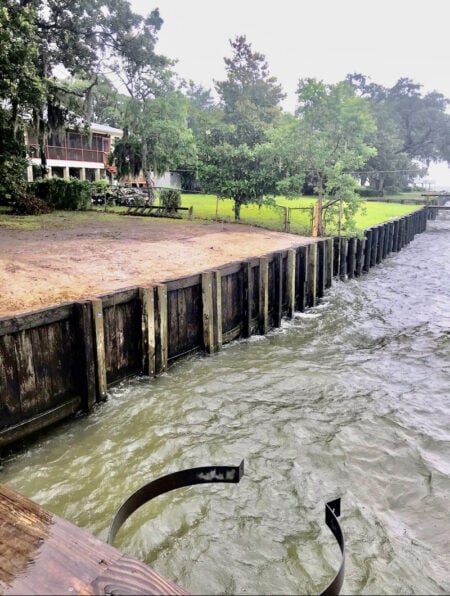
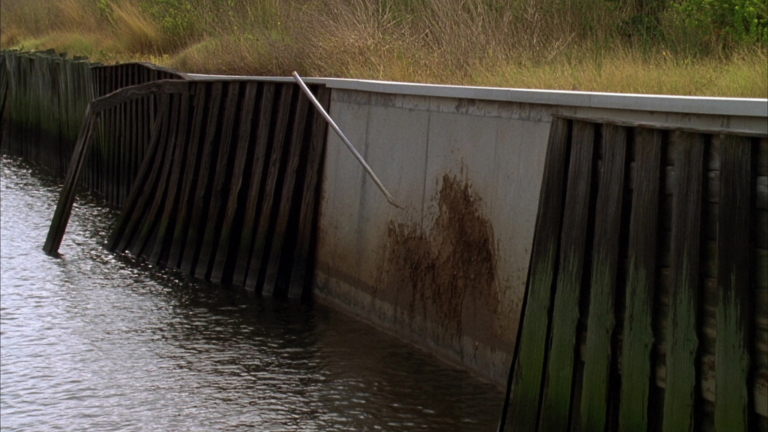
A seawall or bulkhead, the wall that holds your yard back from the water, often looks sound from the creek while it is coming apart behind. Walk the top first. Sinkholes, soft spots, a sunken strip of lawn, or a seam opening between the cap and the soil all mean fill is washing out through the wall.
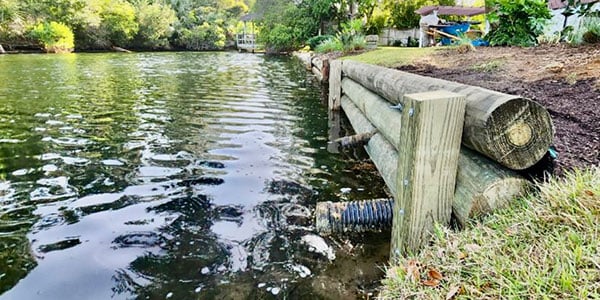
From the water side at dead low, look for panels bowed outward, a cap that has cracked or lifted, and weep holes that are blocked or running muddy. Weep holes let trapped water drain through the wall instead of pushing on it, and weep holes, filter fabric and French drains explains how that drainage is meant to work. If a wall has leaned since the storm, the real question is what is holding it back, which is where tiebacks and when they belong in a wall comes in.
Floats, gangways and lifts
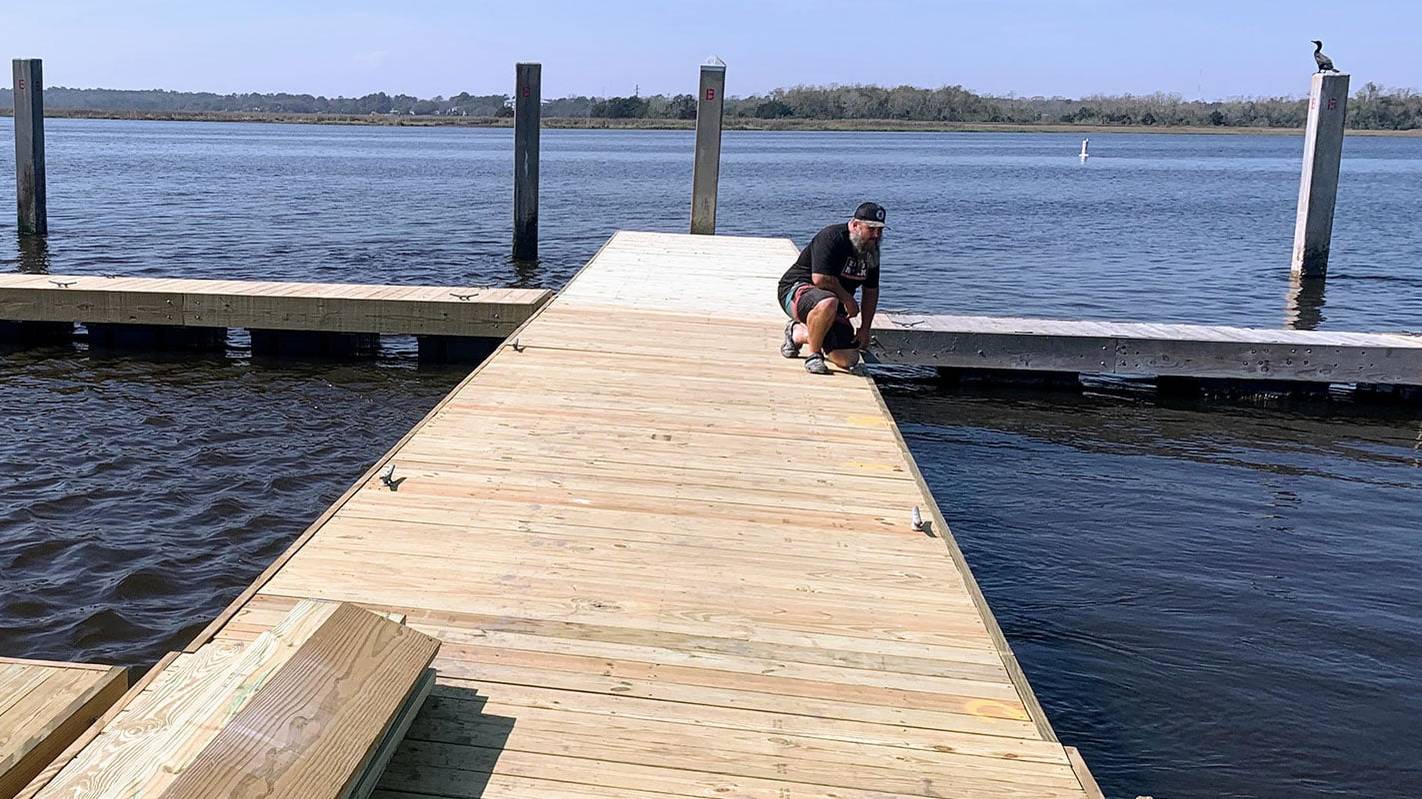
Floating docks fail at their connections. Check gangway hinges and rollers, through-bolts at every float frame, and the guide piles the float rides on. A float that rode up over a short guide pile during surge leaves scarring that shows it. A corner sitting low means a float can is holed or waterlogged, and it will not come back on its own.
On a lift, look at the cables for kinks, broken strands, and rust at the drum, then the bunks, the motor box, and whether the cradle still sits level. Charleston Dock Doctors is an approved authorized Hurricane dealer, so lift work can mean repair, parts, or replacement depending on what the inspection turns up. If the lift is finished, what a boat lift costs to install in the Lowcountry covers what drives the price.
Photograph it before you clean it up
Documentation is the step people skip and regret. Take the photographs before you drag anything to the curb, because debris sitting where it landed is part of the record.
- Wide shots from shore showing the whole structure, then from the far end looking back.
- Close shots of every failure: each loose pile, each sprung board, each separated connection.
- Something in frame for scale, and a low-tide shot of anything below the waterline.
- The seawall cap, the lawn behind it, and any hole or settlement.
- Anything you have from before the storm, even a family photo with the dock in the background.
Keep the dates, and note what you did to secure the property and when. Charleston Dock Doctors furnishes insurance certificates with its proposals, and a written, itemized scope is easier to hand an adjuster than a number given over the phone.
What gets repaired and what gets replaced
Not everything that looks bad is structural, and not everything that looks fine is sound. Decking, handrails, trim, and fasteners are usually repairs. Piles that moved, framing racked out of square, and a seawall that has lost the soil behind it are usually replacements, because the part that failed is the part carrying the load.
Some work in the tidal zone does not hold no matter what it costs, and repairs that almost never work is the blunt version of that list. For the larger call, whether to repair or replace a Charleston dock walks through how to weigh it. Scale matters for paperwork too: a replacement is more likely to need a permit than a repair in kind, and work in tidal water involves the U.S. Army Corps of Engineers Charleston District among other agencies. Our page on permitting parameters for waterfront work covers what that means here.
Get an honest read before you sign
After a storm, proposals arrive fast and some are vague on purpose. A scope that names pile counts, sizes, fastener types, and a sequence is a scope you can compare. One that says “repair dock” is not.
Charleston Dock Doctors is a boutique marine construction outfit working out of 1732 Elm Rd in Charleston, across nineteen Lowcountry communities from Awendaw and Moncks Corner to Edisto Beach and Wadmalaw Island. Homeowners and HOA boards call us to gut-check other contractors’ proposals, and sometimes the honest answer sends the work somewhere else. Boards handling shared structures can start with HOA and community dock maintenance. When you want eyes on the structure, contact Charleston Dock Doctors with your photographs and the tide you took them on.
Frequently asked questions
How soon after a storm should I inspect my dock?
As soon as the weather has passed and the water is back down, but time the real inspection for dead low tide so the tidal zone is visible. Do the first look from shore to judge whether the structure is safe to walk. If power is out or a dock pedestal is submerged, keep the breaker off and stay clear until it has been checked.
Is storm damage to a dock covered by homeowners insurance?
That depends entirely on the policy. Docks and other detached structures are handled differently from the house, and wind damage and flood damage are often treated as separate questions by separate policies. Call your carrier before work starts, and keep dated photographs and a written, itemized scope so the claim rests on something an adjuster can read.
Do I need a permit to repair a storm-damaged dock in Charleston?
Often the answer depends on how much of the structure is being replaced. A repair in kind to an existing permitted dock is treated differently from new or expanded construction, and work in tidal water involves state and federal agencies. Ask before the work is scheduled rather than after, because permitting drives the timeline more than the carpentry does.
How can I tell if a piling is damaged below the waterline?
Go out at dead low with a flashlight. Look for a pile standing in a scoured pocket instead of tight soil, soft or spongy wood you can push a key into, splits running down from a bolt, and marine growth that has been scraped off in a band where something struck it. A pile you can rock by hand has lost its grip in the mud, whatever the top of it looks like.
Can a leaning seawall be straightened or does it have to be replaced?
It depends on why it leaned. A wall that moved because the soil behind it washed out through a failed joint may be repairable once drainage and restraint are corrected. A wall whose panels have bowed or whose structural members have failed is usually a replacement. The inspection is about which of those two you have, and that answer comes from the land side as much as the water side.