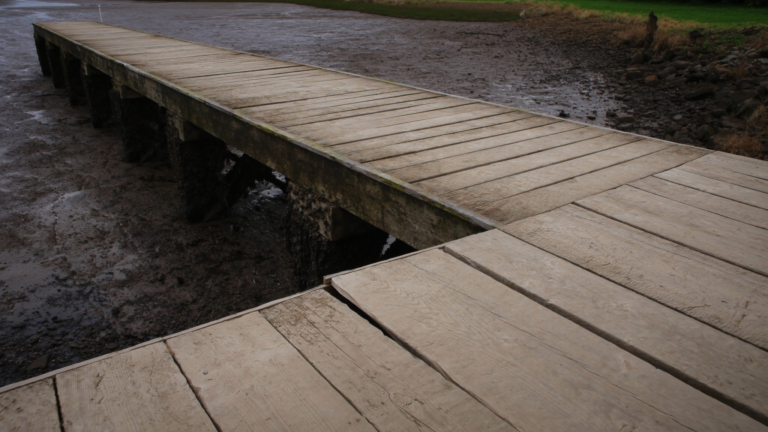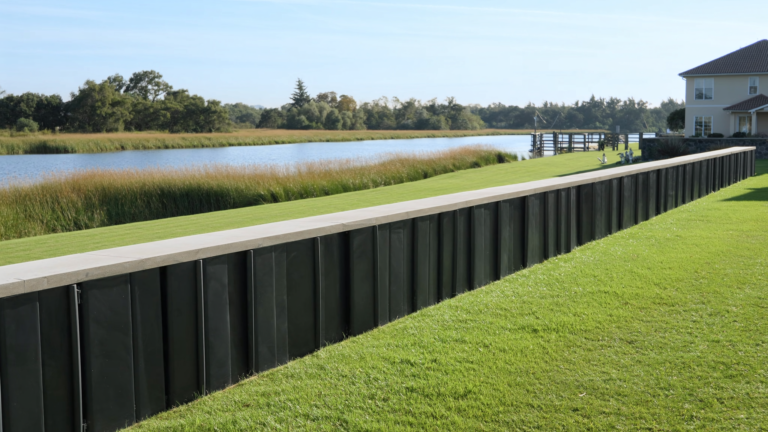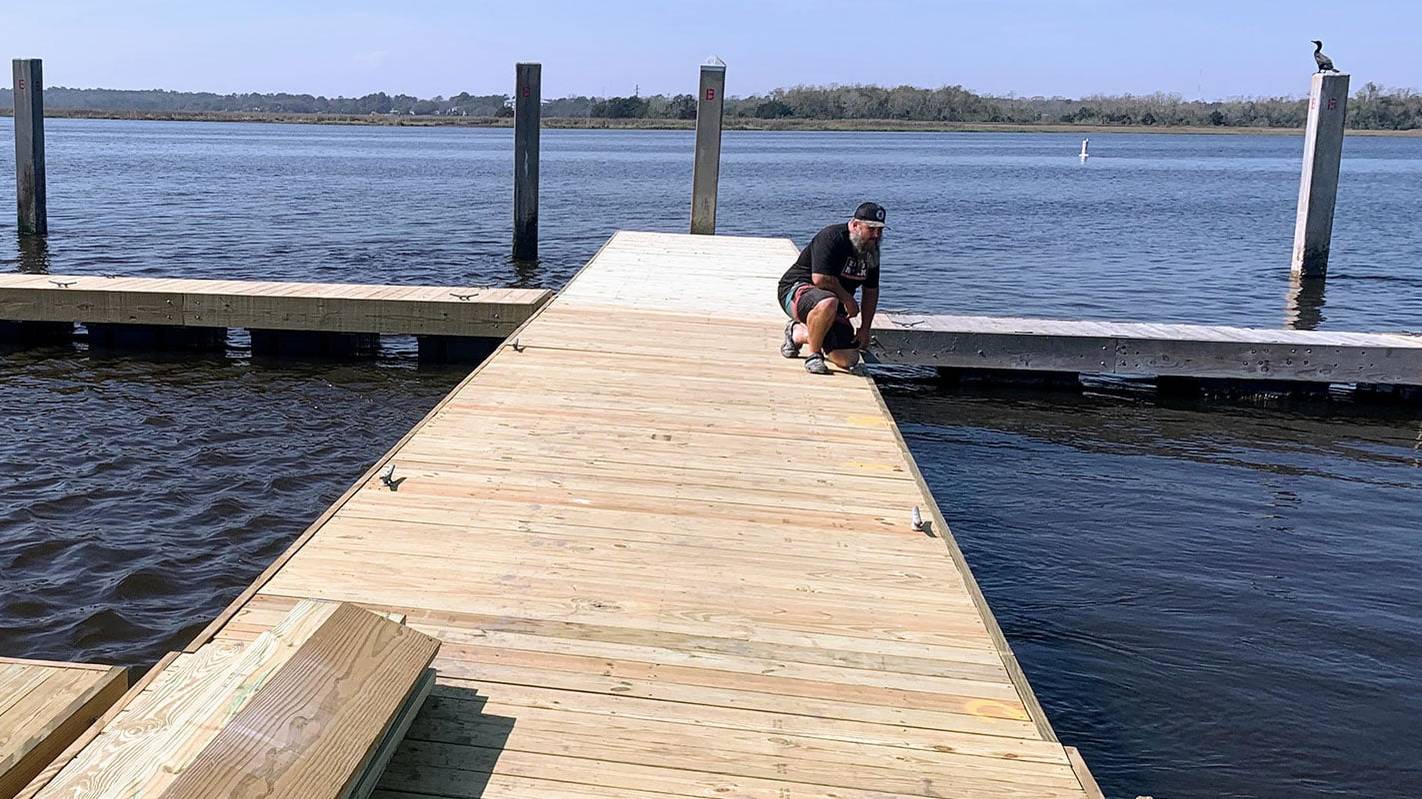
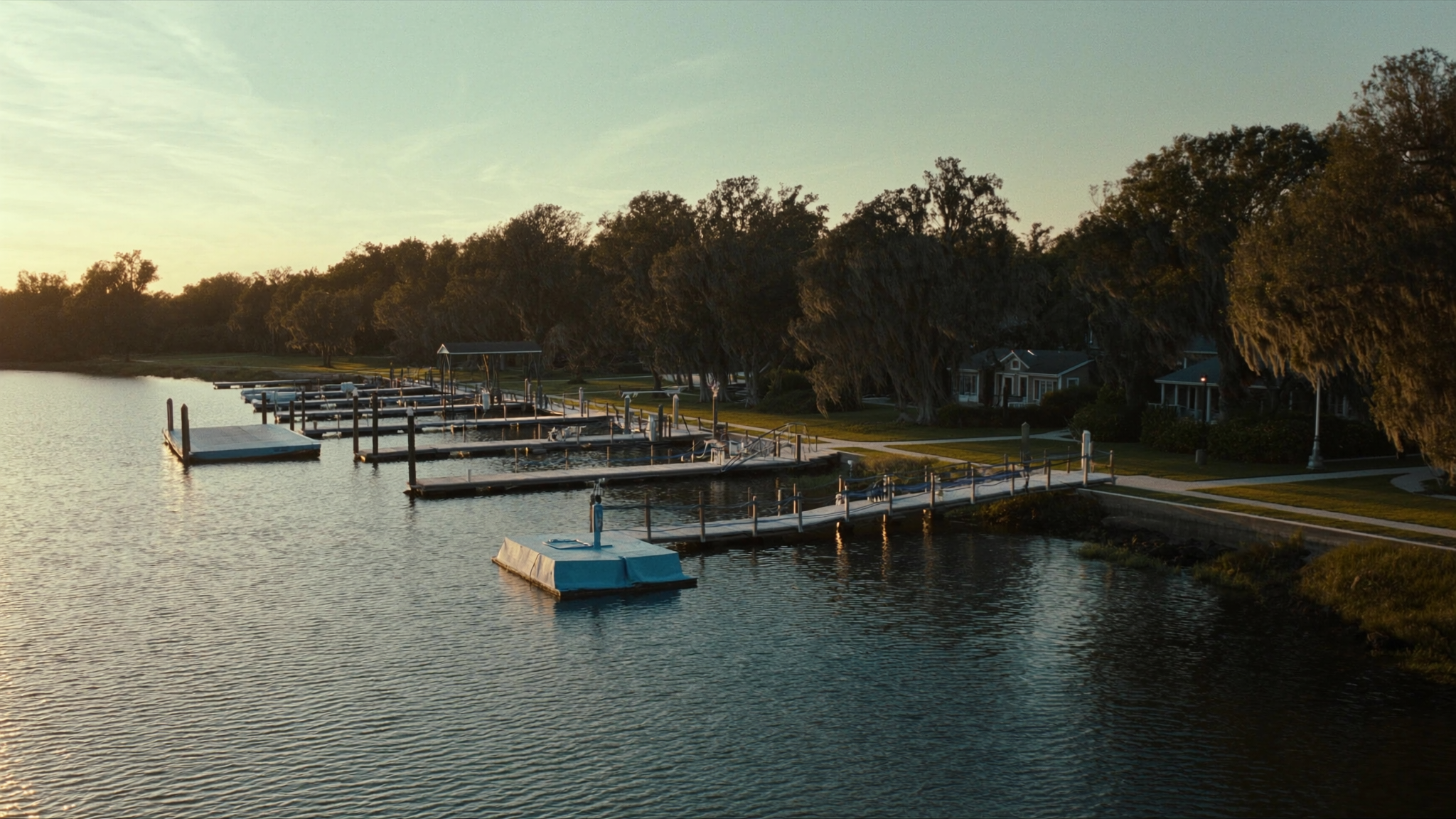
Private docks get looked after because one person owns the problem. Community docks get looked after when somebody makes it their job, and in a lot of Lowcountry neighborhoods nobody has.
The result is predictable. A shared dock quietly declines for eight years while everybody assumes somebody else is watching it, and then it fails all at once and the association is facing a special assessment nobody budgeted for.
It does not have to go that way, and the fix is mostly administrative rather than structural.
Start by establishing who actually owns it
This sounds obvious. It is regularly not.
We have been called out to community docks where the association assumed it was common property, and the covenants said something different. We have seen docks that serve five houses and are permitted to one. We have seen structures built by a developer decades ago with no clear record of who inherited responsibility.
Before you budget anything, get clear on three things: who holds the permit, what the covenants say about maintenance responsibility, and what the association’s insurance actually covers on the structure. Do this while everyone is friendly, not after a piling fails.
Why shared docks wear out faster
A community dock does not get the same use as a private one. It gets substantially more, and the load is less predictable.
- More foot traffic, more often, including groups.
- More boats coming and going, and more contact with pilings and fenders.
- A wider range of boat sizes and a wider range of docking skill.
- Gear left on the structure that a private owner would put away.
- Nobody noticing small damage, because nobody feels responsible for reporting it.
That last one is the real killer. On a private dock, the owner notices a loose board within a week. On a community dock, forty people walk past it for a year and each assumes it has been reported.
The two-inspection year
The single most effective thing an association can do is put two inspections on the calendar and make them somebody’s named responsibility.
Spring, before the season. Walk the whole structure at dead low tide. Check every piling for waisting, softness and movement. Sight the walkway for racking. Check every handrail, every ladder, every cleat. Look at the gangway hinges and the float hardware if you have one. Photograph anything that has changed since last time.
Fall, after storm season. Same walk, focused on what weather did. Surge moves things subtly. A piling that shifted an inch in September is a piling that will shift more next year.
Keep the photos in the association’s records. A five-year photo history of the same pilings tells you far more than any single inspection ever will, and it is what turns a surprise assessment into a planned expense. Our seasonal maintenance guide works as a checklist for both walks, and the piling section of this piece on dock pilings shows exactly what to look for.
Budget for it as a reserve, not a repair
Most associations treat the dock as a repair line: something goes wrong, money gets found. That is how you end up with a special assessment.
A dock is a depreciating capital asset with a finite service life, exactly like a roof or a parking lot. It belongs in the reserve study. Someone should be able to tell you roughly how old the structure is, what its remaining life looks like, and what replacing it would cost today.
If your reserve study does not include the dock, that is worth fixing at the next board meeting. It is a much easier conversation now than after the structure gets closed.
What to fix first when the money is limited
Boards work with a budget, so here is the honest priority order.
- Anything that is a safety issue right now. Missing boards, failing handrails, a compromised ladder. Fix or close it off immediately. Liability on a shared structure is a real exposure.
- Structural pilings. Everything else is cosmetic by comparison. A failing piling gets worse and takes framing with it.
- Framing and connections. Soft joists, elongated bolt holes, corroded connectors.
- Water and power, if present. Electrical faults on a wet shared structure are not something to defer.
- Decking and finishes. Genuinely last. Ugly is not urgent.
Boards frequently invert this because decking is what residents complain about. Resist it. New boards on failing pilings is money spent on the least important layer.
Write down the rules
Most damage on community docks is avoidable and comes from ambiguity. A short, posted set of rules helps more than people expect: maximum vessel size, whether overnight tie-up is allowed, what may be stored on the structure, who to contact about damage, and a plain statement that damage caused by a resident’s vessel is that resident’s responsibility.
Give people one name and one number for reporting problems. Reporting rates go up dramatically when there is somewhere obvious to send it.
We work with boards
We do a fair amount of association and marina work, and we understand that a board needs different things than a homeowner does. Documentation you can put in a packet. A condition assessment that distinguishes urgent from eventual. Phased proposals so the work can be spread across budget years. Numbers you can defend at a meeting.
If your community dock has not had a proper look in a few years, that assessment is the right starting point. It usually turns up less bad news than boards fear, and it gives you a plan instead of a worry.
Our marina maintenance piece covers the same logic at larger scale. See our maintenance and repairs services, or get in touch and we will come look at your structure.