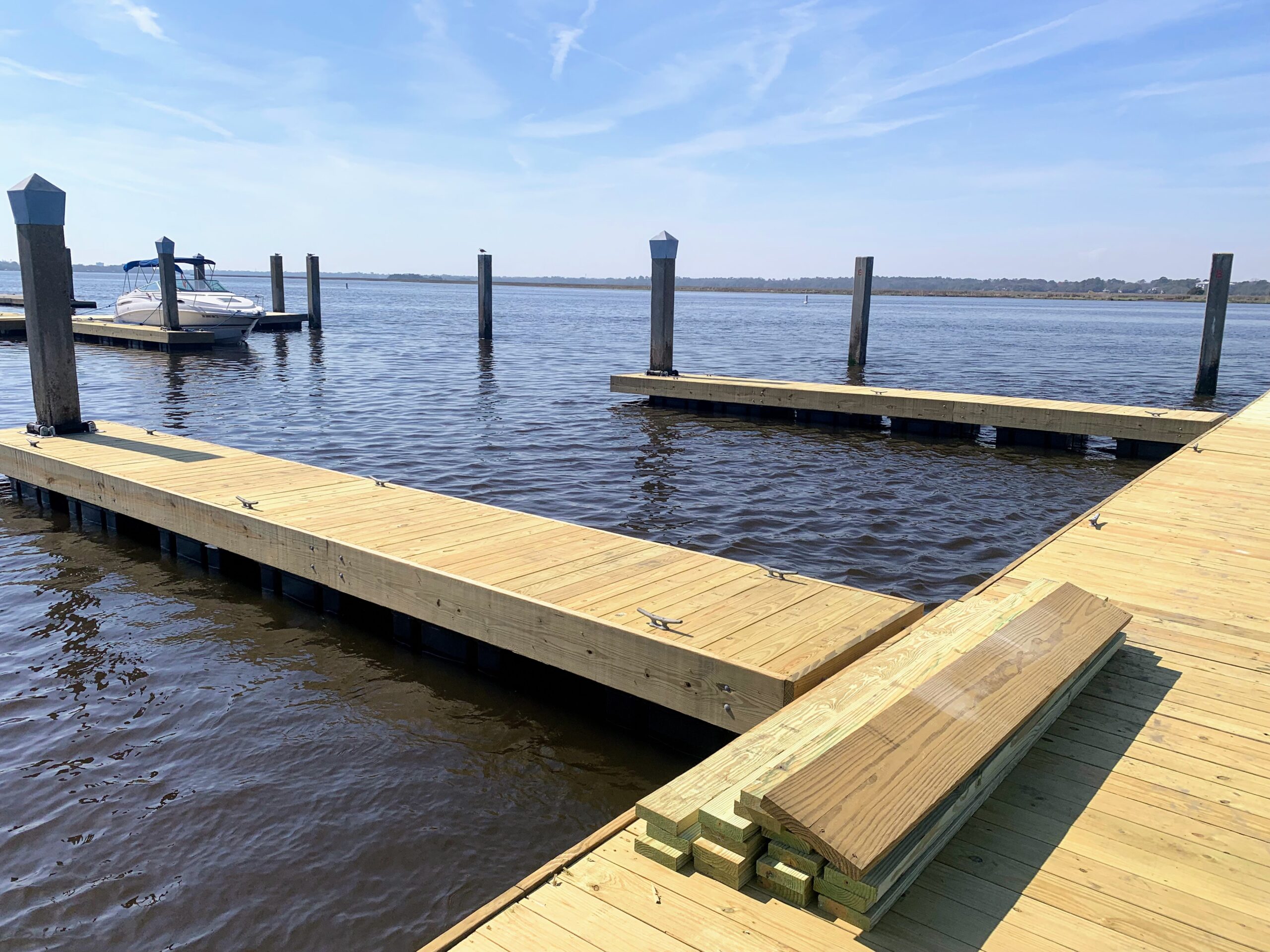
Ask what a floating dock costs and the honest answer is: it depends on more than the size of the float. Two docks with the same square footage can come in very differently, because a floating dock is really a system: the float, the pilings that hold it in place, the gangway that gets you down to it, and whatever it has to attach to.
Here is what actually drives the price on a Charleston creek, and what to ask before you sign anything.
The float itself
The float is the part people picture, and it is only one line on the bid.
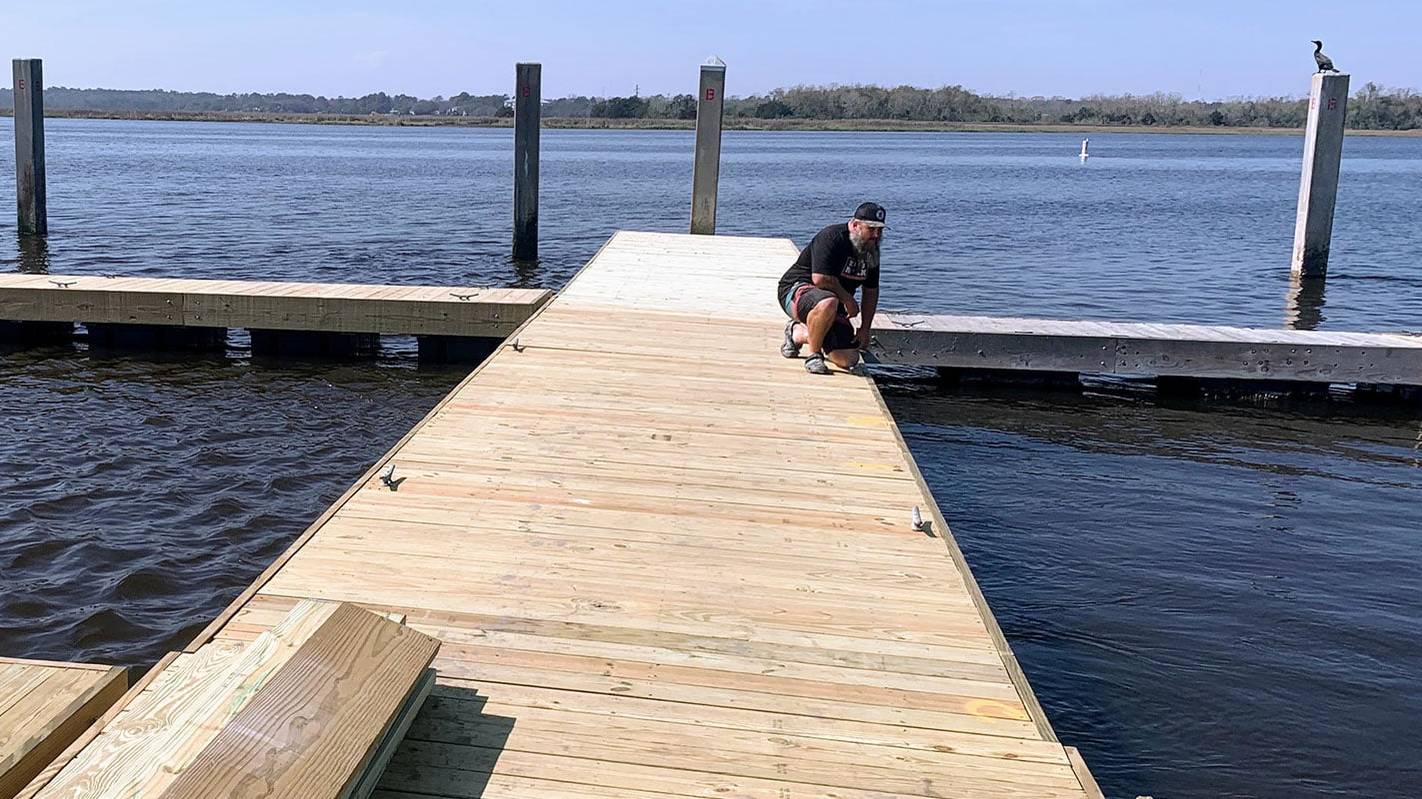
- Size and shape. A simple rectangle is the most efficient. L-shapes, T-heads and boarding fingers add framing and connections.
- Flotation. Encapsulated foam floats cost more than bare foam or drums, and they last longer in salt water and hold up better to wakes and debris.
- Freeboard. How high the deck sits above the water affects how the dock feels underfoot and how it lines up with your boat. It is set by the floats you choose and the load on them.
- Decking. Treated lumber is economical; composite costs more up front and needs less upkeep. See choosing decking for a Charleston waterfront.
Pilings and hoops
A floating dock has to be held in place while it rides the tide. That usually means pilings with hoops or pile guides. Pile count, length and how deep they need to be driven depend on your mud, your current and how exposed the dock is to wakes and storms. Pilings are often a bigger share of the cost than people expect, and they are the last place to save money. Read Pile Driving Done Right.
The gangway
The gangway connects your fixed pier or bank to the float, and on a Charleston creek it has to work across a tidal swing of roughly five to six feet on an ordinary day. Longer gangways are gentler to walk at low tide and cost more. Aluminum is light and resists corrosion; wood is heavier and needs more attention at the hinge and rollers. Our gangway guide walks through length and slope.
What it attaches to
Adding a float to a sound pierhead is one project. Adding it to a pierhead that is near the end of its life is two. If the existing structure cannot carry the gangway load, the bid has to include repairs or new pilings, and a good contractor will tell you so up front.
Site access and timing
Everything has to get to the water. A site with good access from the yard is simpler than one where materials and equipment come in by barge. Shallow creeks that drain at low tide limit the hours a crew can work. Both show up in the price and the schedule.
Accessories
Ladders, kayak launches, cleats, bumper rails and corners, benches and boat lifts all add up. They are worth planning at the start, because adding them later can mean re-working the float or the pilings. See kayak launches for docks.
Permits
New floating docks and changes to an existing dock’s footprint over tidal water or marsh usually need approval. Permitting affects the timeline more than the bill, but it is part of the project. See the Charleston dock permit timeline.
How to compare two bids
- Check that both bids include the same float type, size and decking.
- Compare pile count, length and driven depth, not just “pilings included”.
- Confirm gangway length and material.
- Ask what happens if the existing pierhead needs work.
- Make sure removal of any old float and cleanup are included.
If a bid is much lower, it is usually missing one of those lines. Here’s the thing: the water always tells on bad work, and a float that was underbuilt shows it the first time a big wake or a king tide comes through.
Get a real number for your dock
The fastest way to an accurate number is a site visit. Charleston Dock Doctors builds and installs custom floating docks and boarding fingers across Charleston, Mount Pleasant, James Island, Johns Island and the islands. Request a quote or call 843-224-2653.