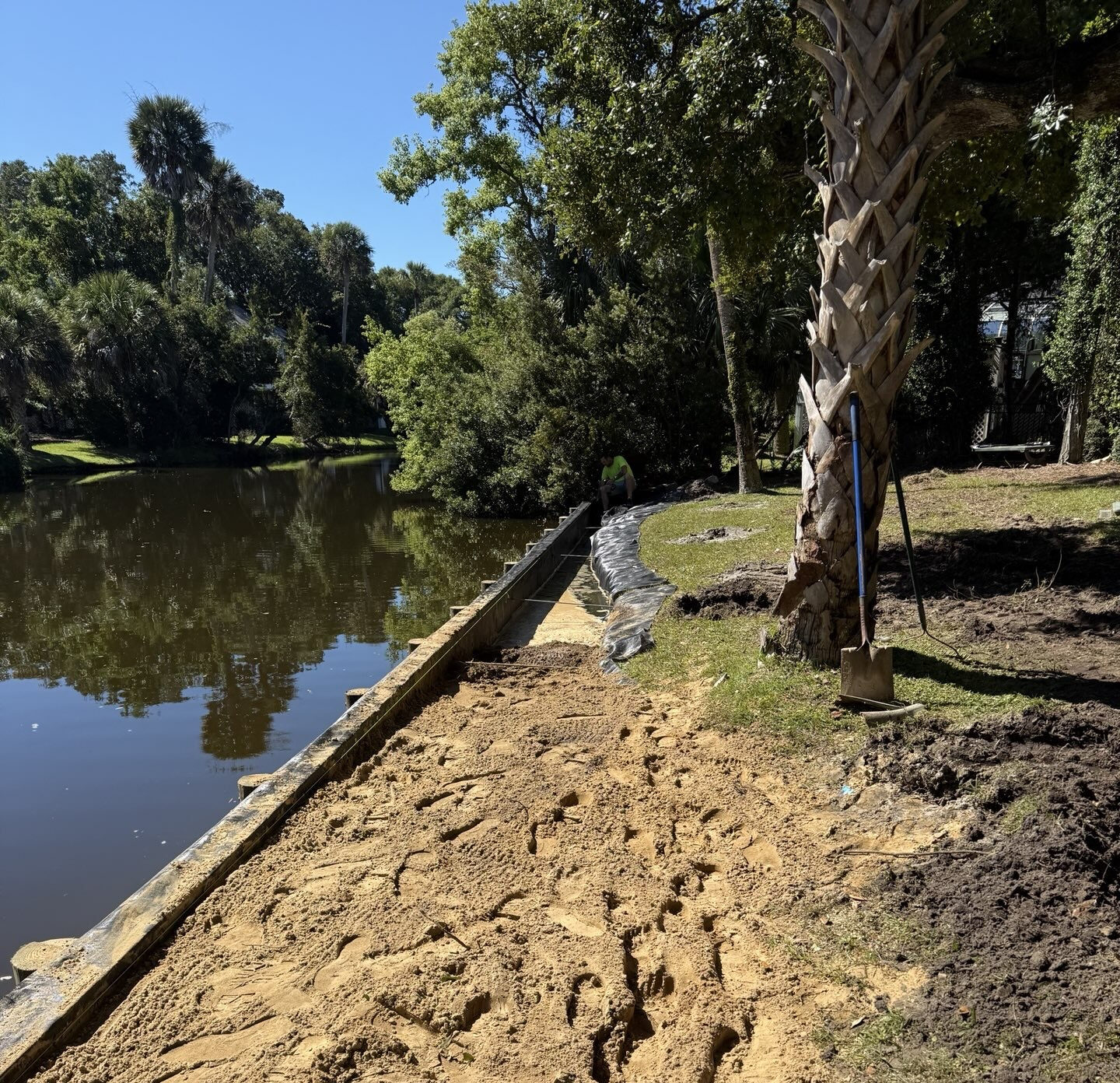
A straight, clean seawall looks great along a Charleston waterfront. But what you see from the water is only part of what makes that wall work.
Behind the finished lumber or vinyl face, there’s an entire system dealing with soil, groundwater, drainage, and structural pressure. At Charleston Dock Doctors LLC, we believe those hidden details deserve just as much attention as the finished appearance.
Pressure From Both Sides
A seawall doesn’t just deal with water pushing against it. It also holds back soil, which becomes heavier and can exert greater pressure when saturated.
Around Charleston, Mount Pleasant, and Isle of Palms, rainfall, runoff, changing water levels, and local soil conditions all influence how a seawall needs to perform.
That’s why understanding the property matters before choosing how to build the wall.
Backfill Is More Than Just Dirt
What goes behind a seawall is important.
Depending on site conditions, construction may involve selected backfill, #57 drainage gravel, and filter fabric.
Gravel can provide a path for water to move through the backfill. Filter fabric helps separate soil from drainage materials, reducing the chance of fine particles migrating where they shouldn’t.
Proper grading matters, too. Water collecting behind a wall needs somewhere appropriate to go.
Structural Support You May Never See
Piles, wailers, and tiebacks can all play important roles in seawall construction.
Piles provide foundational support. Wailers are horizontal structural members that help distribute pressure across the wall. Tiebacks connect the wall to anchoring systems farther inland, helping resist outward movement.
Not every seawall requires the same arrangement. Wall height, retained soil, water exposure, and site conditions determine what support may be appropriate.
Drainage Should Never Be an Afterthought
Water trapped behind a seawall can create hydrostatic pressure, adding stress to the structure.
Weep holes allow water to escape through the wall. Gravel, filter fabric, and French drains may also be incorporated to help manage groundwater and runoff.
The important part isn’t simply installing drainage materials. It’s having a suitable path for water to leave without carrying valuable soil with it.
The Finished Appearance Is Only Part of the Story
A continuous top cap, straight wall face, and neat transitions all reflect attention to craftsmanship.
But a beautiful wall still needs the right support and drainage behind it.
Charleston Dock Doctors LLC considers both sides when discussing seawall construction, bulkhead repairs, and waterfront retaining walls.
Build for the Conditions, Not Just the View
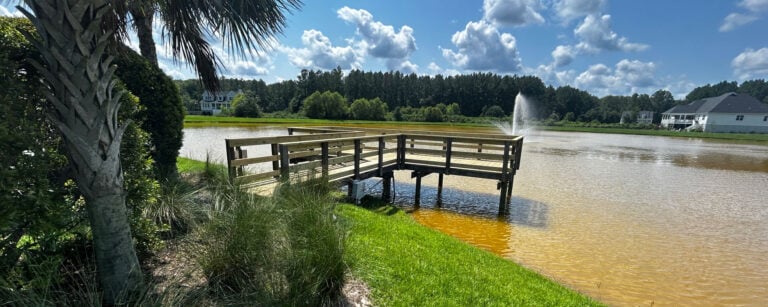
Every shoreline is different. A sheltered pond on James Island presents different challenges from a tidal waterfront along the Wando River.
Charleston Dock Doctors LLC works with waterfront property owners to evaluate those conditions and discuss practical construction or repair options.
Planning a seawall or concerned about an existing one? Visit CharlestonDockDoctors.com to request an estimate and talk through what your shoreline needs.