
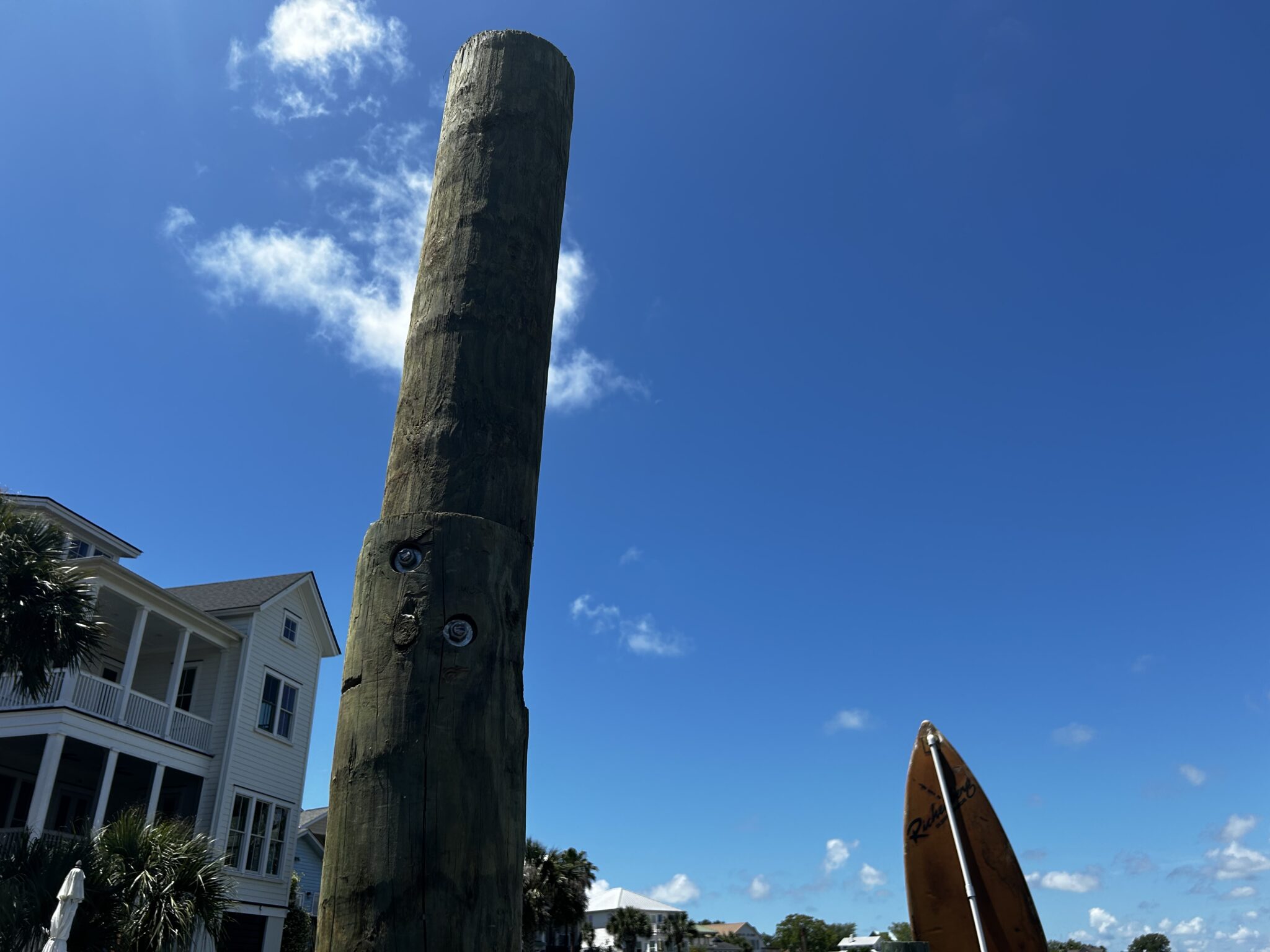
Here’s the truth: your dock, pier, or seawall is only as good as its piles. If they aren’t driven deep, the rest is lipstick on a bulldog. In Charleston, James Island, and Folly, soils vary—soft mud, marl pockets, shell. We choose the right method and drive until the pile says “enough.”
Methods we use (based on soils & tides)
- Impact driving: A hammer seats the pile through tougher layers.
- Vibratory driving: Helps in looser, saturated soils.
- Water-jet assist (hydraulic washing): Cuts friction in dense/clayey zones to reach proper depth.
Refusal depth matters
We target at least ½ the pile’s length embedded (more when engineering or conditions call for it). Why? Lateral loads from wind, wake, and current demand it. Shallow piles = wobble now, failure later.
Common shortcuts (and how you’ll feel them later)
- Stopping shallow: A 12′ pile seated only 4–5′ will rack. You’ll see leaning piers and loose decking fast.
- “Concrete makes it fine”: It doesn’t fix a short pile. Depth does.
- Wrong method for the soil: Using only vibratory in dry, compacted layers won’t get you home.
What failure looks like
Leaning pierheads, bouncing deck boards, bulkheads that start to bow. We repair a lot of bowed walls: sometimes we “freeze” the bow with tiebacks (steel all-thread anchored into undisturbed ground with concrete). Other times, we excavate, add deadman piles, tension the wall back, and rebuild—effective, but it’s the pricey route. Doing piles right the first time costs less than fixing shortcuts.
For foundations that last, hire the team that treats pile driving like the sacred step it is. Charleston Dock Doctors LLC builds docks and walls that stand up to Charleston’s tides—today and ten years from now. Call Charleston Dock Doctors LLC to get a foundation you can trust.